VISUAL SYNTHESIS | MARCH 2026 | VOLUME 4
Kim Gros
Kim Gros is a clinical herbalist and founder of Moonstone & Mulberry Herbal Clinic. Experts like Kim offer a new lens through which to see natural ecologies, one that provides a more holistic understanding of our health.
DISCUSSION
Kim Gros has a rich background in herbal healing, Traditional Western Herbalism, Ayurveda, and Traditional Chinese Medicine (TCM). The motivation from this conversation with Kim originates from initial stories I heard about Kim’s Plant Walk which she co-hosts here in New York in Central Park. On these walks, Kim provides insights into the healing properties and behaviors of the very plants growing right in our own city. In this discussion, we unpack herbalism; what it looks like as a practice, how it manifests in urban environments, and how it can help us feel more embodied and in tune with our personal health.
This was the first live event recorded where Kim presented her story to an audience of folks curious about the practice of herbalism.

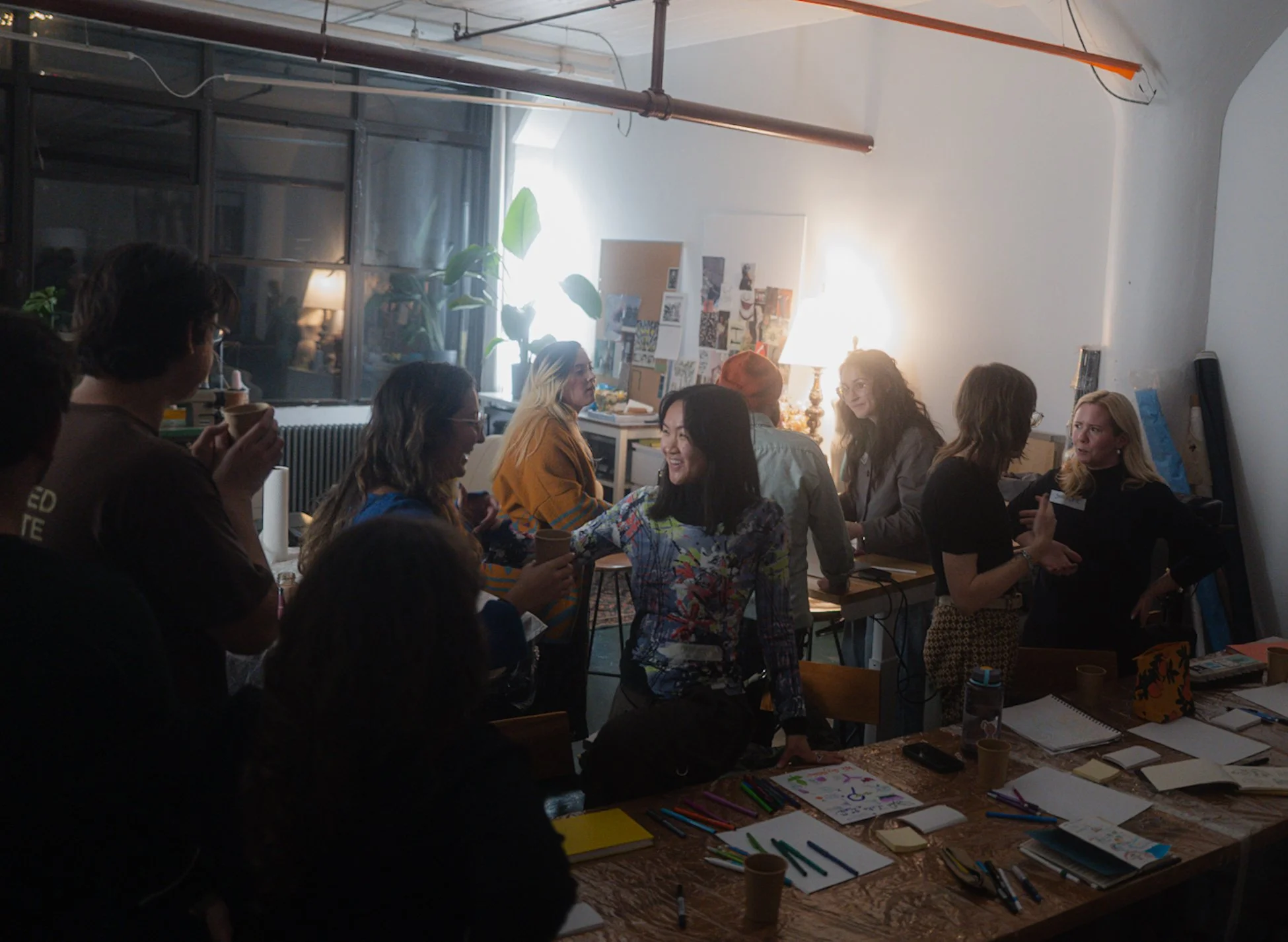
PHOTO CREDIT: NELSON LUNA - See more of his work →
ILLUSTRATION
TRANSCRIPT
Chapter 1: Plants Discussed
Kim Gros: There are plants in the US that are in endangered or at risk if they are endangered or critically endangered. It is absolutely illegal to harvest harm, destroy, dig them up, do anything to them. There's also an issue, there's not enough reporting done in the us. There's not enough people going out and counting how many are left of a certain species, and there might be plans that aren't currently listed as endangered that actually are, if we had the resources to go look at it. One of them Trillium.
Trillium
Erin Murphy: Yeah.
Kim Gros: Uh, Trillium rows in Central Park. Okay. Which is wild. Yeah, that one is endangered. So really, if you see it, just admire it from afar. Thank whatever God, entity, or spirit you believe in. It takes about seven to 15 years to flower. Wow. This is not something you'll easily see in the wild, but when you do, it's also a sign that it's a healthy ecosystem.
Erin Murphy:Oh. So that is very nice. It is one of my favorite plants that you sent me. I had herb homework — everyone where I've asked these questions a little bit beforehand, and for some of the ones I wanted to just get some examples of what they look like. And you mentioned Trillium as an endangered flower herb.
And I looked it up and I'm like, wait a second. This is gorgeous. And it's easy to draw.
Yeah. And every part of the plant is threes? Uh, yeah. Petals, three sepals, and three leaves.
Erin Murphy: It's like embodying the rule of thirds.
Kim Gros: Yep. You can find flower essences that are made of Trillium without touching them, if that's a plant you feel drawn to work with.
Foxglove
Erin Murphy: I'm gonna switch over to your terrace. So you mentioned in one of the things that I found online that you have a terrace garden. What are you currently growing and why?
I'm not actively growing anything right now, 'cause it's just starting. Yeah. The spring hasn't even started. And of course it was very cold this winter, so I don't even know how many of my plants will have abated.
It'll be a surprise. Ooh, okay. Some of them are already coming back, so it's not halted, and I have seeds and I have to start them, but some of the ones that I have that I'm really hoping are gonna make a comeback — not today. The — this year, soon. Today. That would be crazy. That'd be great. One of them is Foxglove.
Ooh, 'cause it's so beautiful. That's also one that has a two-year cycle. So the first year it's just a basal rosette, just leaves, goes to the forest floor — English is hard — and then the second year it shoots up and makes these gorgeous flowers. Yes. One of the things I really love about my job and when we do these plant walks is that I get to add all these stories and language and all of that into the mix.
Erin Murphy: Yeah.
Kim Gros: With this plant. I just want to tell you how it's called in Dutch, it's called 'vingerhoed kruid', which again means nothing to you, but the translation is a 'thimble herb'. Because it looks, they look, the flowers is like thimbles. You could just—
Erin Murphy: Yeah!
Kim Gros: ...used for sewing.
Erin Murphy: we are in a sewing studio. There we go...
Kim Gros: ...Yeah. Excellent. And they're also, they're very connected to fairies. There's a legend that the fairies gave fox glove to foxes to wear his gloves so they could raid the chicken coop without being heard. They like, yeah, like that. And it's also said that the fairies wear them like little caps or little hats. The flowers, they are used in herbalism. I don't use it. And I'll tell you why.
Erin Murphy: Tell me why!
Kim Gros: It has cardiac lyphocytes. Ooh. Kill you.
Erin Murphy: Oh. God. Okay.
Kim Gros: This is a very toxic plant, but it is amazingly avid because some of our heart medication is derived from...
Erin Murphy: Wow.
Kim Gros: ...Fox glove. Specifically, it helps the heart when you have heart failure or arrhythmias. It helps it contracts better and have more ... rhythm. But this is not only a goose herb, this is not an, I don't use it because this is, this can literally kill someone.
Erin Murphy: Gotcha.
Kim Gros: But there are doctors that are medical doctors who are also herbalist who will use this, that you can trust,
Erin Murphy: I see.
Kim Gros: So it's still, yeah, still very much used. First thing I would say in terms of which plans to leave alone,
Erin Murphy: Yeah.
Poison Ivy
Kim Gros: It's one that everyone knows. It's Poison Ivy
Erin Murphy: Ayo!
Kim Gros: And we have Ivy right here.
Erin Murphy: We have Ivy!
Kim Gros: It's very common. The plant is not actively trying to defend itself against something, which is what it would do if it was toxic.
Like some other clients we might talk about. I think that changes the energy when you think about poison ivy, it's literally not a defense mechanism 'cause a lot of animals can eat it. It is literally us as humans that cannot handle it. And it's a plant too that you should not, you shouldn't burn it. You if you get in contact with it, if it's, if it brushes up against your dog or your coat or something...
The, um, urushiol can stay on for many years, so you can get a rash...
Erin Murphy: oh, wow.
Kim Gros: ...from touching that thing many years after actually walking past the plants.
Echinacea
Erin Murphy: I love echinacea. Oh my God.
Kim Gros: It is on the...
Erin Murphy: Is it also so called a 'cone flower'?
Kim Gros: Yeah, the common name is 'cone flower'.
Erin Murphy: That's cool!
Kim Gros: The Latin name is, or botanical name is 'Echinacea'.
Erin Murphy: Yeah.
Kim Gros: Many different varieties. I think I have three or four at home. They're just my favorite flower it. They're so strikingly beautiful.They're native to the US. They make amazing medicine. I have them in different colors. I have a double decker one. I'm not even joking.
Erin Murphy: What's a double decker echinacea?.
Kim Gros: So you see how they have the petals setting down.
Erin Murphy: Yeah.
Kim Gros: Which they're not actually petals, but what are they? It's... they're sepals. Right? Lillian?
Lillian (from the audience): Uh…
Kim Gros: ...or they're rays. Rays?
Erin Murphy: Ooh, she's, what's the difference between a petal and a ray-zz?
Lillian: So... there's a petal and then a rays, a bunch of little petals, so…
Erin Murphy: Cool.. Okay. Sorry.
Kim Gros: No, all good.
Erin Murphy: That's good. That's helpful.
Kim Gros: So you see how they're, the rays are coming down like. Like a skirt. And I think part of why I love them so much is because they remind me of Jujus and I did ballet my whole life.
So the... but the double decker one, it'll grow a second set of rays from the top.
So it's two layers of them, which is so cool. I don't use or harvest any of the-- most of the plants I grow, I really just grow them for aesthetic value 'cause they're so beautiful. Yeah. Echinacea is actually, if you wanna know a little bit more about it.
Yeah. It is the number one selling plants in the US
Erin Murphy: Wow.
Kim Gros: For a hundred years. It used to be used by Native American people. I mean it still is but
yeah.
How we know how to use it is from them and they used it as a blood purifier specifically for snake bites.
Erin Murphy: Whoa.
Kim Gros: Topically... 'cause it really boosts up your immune system to fight and clean your blood.
Erin Murphy: Yeah.
Kim Gros: And that's act. There's a theory that the expression snake whale. Is derived from Echinacea, and what happened is that some guy, I imagine like in the Wild West, at that point when they came up with their Dr.-- 'Dr. Brown's Longevity Tonic', selling echinacea, but he probably wasn't extracting it right or it wasn't the right dose or something clearly wasn't working and so it probably wasn't working very well and that's where...
yeah. The expression 'snake oil' comes from.
Erin Murphy: That's incredible.
Kim Gros: Yeah, funny!
Erin Murphy: It's, yeah, they didn't understand like the properties of kinesia well enough to actually create something that's a substantial high quality.
Kim Gros: Yeah. And that still happens. Small things. Yeah. To this day. And that's one of the many reasons why you should work with a professional, not just the sell myself, but in general.
'Cause not every plant can be-- to get the phytochemicals, it doesn't work the same way for every plant. You have to know how to extract it, 'cause some plants are water soluble, some are fat soluble. If you're putting a fat soluble plant in water, you're not gonna extract anything, and then you're gonna be like, 'oh my ashwagandha tea didn't help.
It couldn't have helped. 'cause you didn't get--
Erin Murphy: Yeah.
Kim Gros: ...anything out of it. 'cause that's not the right way to prepare it.
Erin Murphy: Yeah.
Elderberry
Kim Gros: So if you're not using it in the preparation where the phytochemicals are extracted, that's, yeah, nothing's gonna happen. See Elder on our plant walk. It's an amazing plant. It's one of the plants I work with 'cause I make an elderberry oxymel.
Oxymels are, I'm assuming a lot of people might not know this, oxymels are an extraction of an herb. It's made in equal parts apple cider vinegar, raw honey. So it's really delicious and healthy and great for your immune system, which is still a plug for--
Erin Murphy: Yeah!
Kim Gros: ...shameless plug.. Um, so I love elderberries and elder in general.
It's a beautiful plant to see throughout the seasons too, because you get to see it when the flowers aren bloom and later on in the season you get to see the, the berries. It's a very important tree in Europe. Farmers would not take down an elder tree 'cause it's believed to be the, the door to the fairy world.
You should never fall asleep under an elder tree unless you wanna be kidnapped by the fairies, which honestly...
Erin Murphy: I do want to be kidnapped.
Kim Gros: Right about now? Um, but just so you know--
Erin Murphy: Take me away.
Kim Gros: Yeah. Time does not work the same in fairyland. So you might think you're gone for just like a little party, but when you come back to the human world, it might be seven years that have gone by. Which again...
I think I'll take it at this point.
Erin Murphy: Yeah!
Kim Gros: I'll take my chances. And it's where fairy, king and Queen meet every midsummer, I believe. So if you hang out there the right time you might see some stuff going on. The elder flowers are edible. There's also the drink, Saint Germain, which is a French liquor that's made from elder flowers.
So if you wanna have little herbal drink, just add it to some wine or some sparkling wine. The energy of elder flower is diaphoretic, so it opens up your pores to the exterior so that we would take that when we're sick to increase our fever.
Erin Murphy: Mm-hmm.
Kim Gros: Yes, you've heard that right. We wanna support a fever 'cause that our body is doing that on purpose when we're sick. It is cranking up the heat in our body to kill the viruses that can't survive at a higher temperature. What we do in our society is take pills that suppress it, and then we're sick for much longer.
Erin Murphy: Mm-hmm.
Kim Gros: What you wanna do is take herbs that support the fever and that open up your pores so you can literally sweat it out and move the toxins out.
Erin Murphy: Yeah.
Kim Gros: And elder flower is one of them that just opens things up... and it is uncomfortable for a little while. Like having a fever is uncomfortable and boosting that even more is uncomfortable.
Erin Murphy: You're at least like working with your body.
Kim Gros: You're working with your body, and then it's killed faster and you feel better faster.
The berries are the most supreme antiviral remedy that we know of, and it's been studied extensively. There are so many studies on elderberry, there's no doubt about how amazing it works, and it also tastes good, and you can. Have it in jelly in so many different forms. So how lucky are we that we get to have medicine that tastes good?